Fine Art Logistics
How Helu-Trans (S) Pte Ltd Became Asia's Most Trusted Name in Fine Art Logistics
Published by Verticle in April 2026
Moving a sofa across town requires a van and some padding.
Moving a 17th-century oil painting from Singapore to a museum in Paris requires something else entirely. Climate-controlled transport that maintains temperature and humidity within precise tolerances throughout the journey. Specialist crating built around the specific dimensions, weight, and fragility of the object. Customs documentation that accounts for cultural property export and import regulations across multiple jurisdictions. An installation team trained to treat the object as irreplaceable from the moment it leaves one wall to the moment it is secured on another. And if anything goes wrong at any of those stages, the object cannot be sent back to the factory. It is simply gone.
Helu-Trans (S) Pte Ltd has been navigating those requirements since 1979. What began as a moving company in Singapore has grown into one of Asia's more recognised fine art logistics providers, with offices across Singapore, Hong Kong, Beijing, Shanghai, and Yogyakarta. The client base today includes private collectors, commercial galleries, auction houses, museums, and public institutions across the region. The company's operational infrastructure, supported in part by enterprise technology solutions from Intrasys, spans the full logistics chain from first contact to final installation.
The gap between standard freight and art logistics
Most people who have not had to move fine art professionally underestimate the gap between what standard freight does and what art logistics requires. The gap is significant and it exists at every stage of the process.
A work of art in transit is vulnerable to temperature fluctuations, humidity changes, vibration, light exposure, and physical impact. A single hour in an environment that does not meet the object's requirements can cause damage that is irreversible. Canvas shrinks and cracks. Wood warps. Pigment lifts. Paper deteriorates. Sculpture suffers fractures that cannot be undone. The damage from a transit failure on a high-value artwork is not a claims exercise. It is a permanent loss.
Customs documentation for cultural property is its own specialism. Different jurisdictions have different rules governing the export and import of artworks, particularly those with cultural heritage status. A shipment that is incorrectly documented can be detained at the border, sometimes indefinitely. An installation team that handles the final stage of a move without the right training can cause damage in the last metre of a journey that went perfectly for ten thousand kilometres.
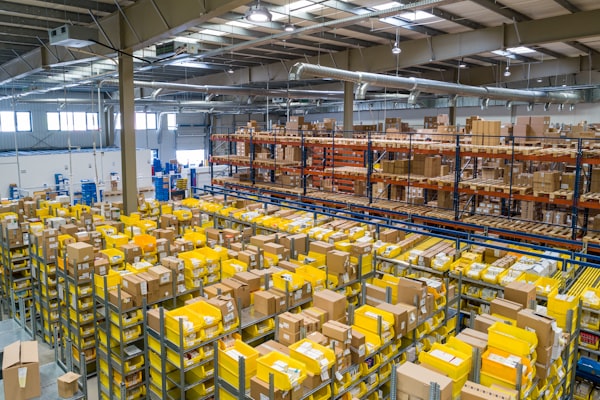
Helu-Trans manages all of it. The services cover professional art handling and packing, local and international transportation using air-ride vehicles and climate-controlled containers, air freight and sea freight coordination, customs clearance and documentation, installation and de-installation, and secure air-conditioned storage at the company's facility at Tanjong Pagar Distripark. The storage facility also operates as an event space, hosting exhibitions, auctions, and private viewings.
The credentials that actually matter in this field
In logistics, certifications can be easy to dismiss. In fine art logistics, they are the difference between a client entrusting you with a work of significant value and not. The credentials Helu-Trans holds are not honorary.
The company holds FIDI-FAIM accreditation, the only internationally recognised quality certification designed specifically for the household goods and moving industry. FIDI-FAIM is independently audited against a global standard that covers operational processes, staff training, insurance coverage, and service delivery. It is not a one-time application. Maintaining it requires ongoing compliance and periodic re-audit.
Beyond FIDI-FAIM, Helu-Trans holds memberships in the International Association of Movers, in ARTIM, and in ICEFAT — the International Convention of Exhibition and Fine Art Transporters. ICEFAT is the most specialised and the most selective of the three. Helu-Trans is the only Singapore-based company that holds membership in it. That is a meaningful distinction. When museums, institutions, and auction houses globally need a Singapore-based partner for a fine art logistics engagement, the ICEFAT network is one of the first places they look. The only local member in that network is Helu-Trans.
Helu-Trans has worked with major public and private institutions across Singapore on art handling, air freight, and transportation engagements, including organisations within the national heritage and library sectors.
From two people to an Asia-wide operation
Helu-Trans started as what the company describes as a pioneering two-person department. The team today numbers over two hundred people and operates across five cities in four countries. That is not a story about aggressive market expansion. It is a story about a client base that moved across Asia and a company that built the capability to follow it.
The art market in Asia has grown significantly over the past two decades. Singapore has positioned itself as a regional hub for the art trade. Hong Kong has long been one of the three major global auction markets. Mainland Chinese cities have become substantial collectors in their own right. Yogyakarta holds a distinctive place in Southeast Asian contemporary art. Helu-Trans has operational presence in every one of those markets, not because it went looking for them but because its clients needed it there.
The dedicated team structures reflect how the client base has evolved. Institutional clients running major exhibitions operate with their own coordination team. Special projects involving large-scale installations or international art fairs have dedicated project management. Private and corporate collectors have access to specialist facilities including viewing rooms and a conservation studio. These are not add-ons. They are the infrastructure that serious collectors and institutions require.
Forty-five years of not getting it wrong
There is a specific pressure that comes with handling objects that cannot be replaced. A logistics provider moving consumer goods can absorb an occasional damage claim. A provider handling a work that has been in a private collection for generations or a museum for a century does not operate with that margin. The only acceptable outcome is that nothing goes wrong.
Helu-Trans has held that standard since 1979. New entrants to the art logistics market can acquire trucks, build facilities, and hire staff. What they cannot acquire is forty-five years of handling significant works through Asia without incident. That record is the asset, and it is not transferable.